I am sitting in a PNW cabinet meeting today in Seattle. I always appreciate the hospitality they show me whenever I can attend. I do listen to conversation and teaching about PNW conference matters. And I always seem to pick up things for consideration in Alaska.
One example today is a process they are hoping to implement that will help churches who want to increase their health and vitality. What is vitality? Does it look different in Washington or Idaho from Alaska? How do we measure vitality? Worship attendance, baptisms, professions of faith are metrics that relate to the UM Church as an institution. How do we measure vitality when it cannot be counted? How are our elderly disciples counted when they cannot attend worship? How can we "count" people who participate with a church via social media? How do new missional communities fit with the UMC institution?
As you can see I have more questions than answers. My final question is this. Should the Alaska conference engage in an invitational process to help local churches look seriously at their mission and ministry?
Grace Always,
Dave

Tuesday, February 19, 2013


Tuesday, February 12, 2013
Coaching
Coaching has been around for a long time in sports. I grew up with a very negative image of coaches probably due to my youth football coach who treated us like marine recruits. So don't think of coaching today as one who is towering over another screaming at them on how to be a better leader! It is quite the opposite.
Coaches today are people who have received specialized training to engage leaders one on one in order to help them discover for themselves the direction of their professional and personal lives. It's a bit like Dorothy in the Wizard of Oz. Throughout her journey to find her way home to Kansas she had the power all along. But she needed the help of others to enable her to know it.
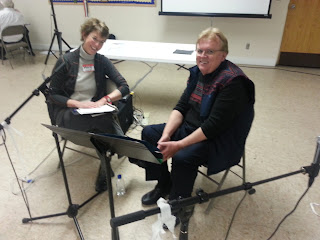 Last week the Alaska UM clergy and deaconess gathered at Anchor Park for our annual retreat. Mary Huycke and Lee Hayward were our leaders to introduce us to the basic principles of coaching.
Our Leadership Team approved major funding not only to provide coaches for our leaders but also to provide learning opportunities both in person and online so that we can be prepared to lead our conference in reaching our mission to transform the world through discipleship in Christ. I am seriously exploring becoming trained as a coach.
This is a clip of our clergy practicing coaching with one another.
Grace Always,
Dave
Coaches today are people who have received specialized training to engage leaders one on one in order to help them discover for themselves the direction of their professional and personal lives. It's a bit like Dorothy in the Wizard of Oz. Throughout her journey to find her way home to Kansas she had the power all along. But she needed the help of others to enable her to know it.
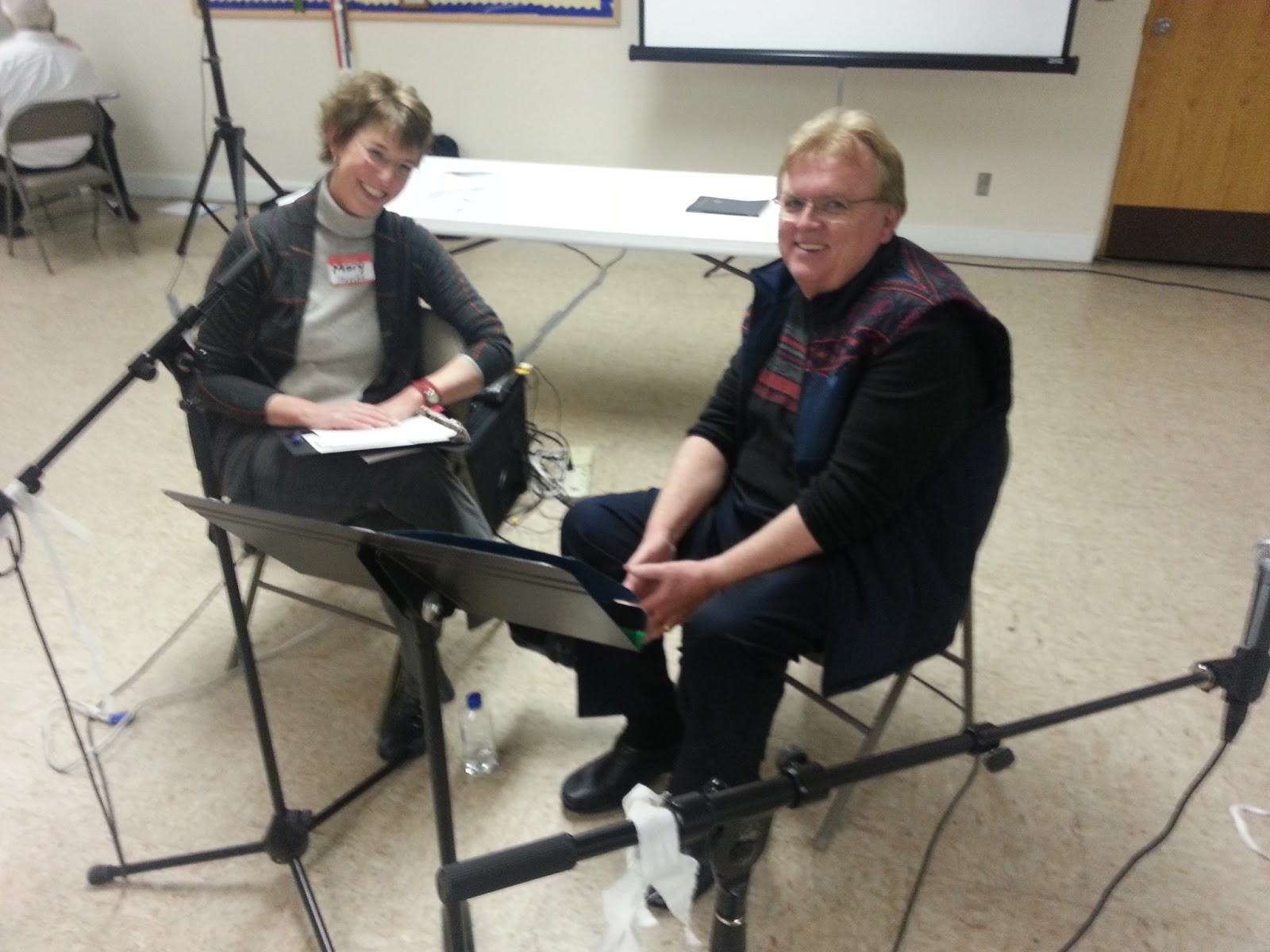
Our Leadership Team approved major funding not only to provide coaches for our leaders but also to provide learning opportunities both in person and online so that we can be prepared to lead our conference in reaching our mission to transform the world through discipleship in Christ. I am seriously exploring becoming trained as a coach.
This is a clip of our clergy practicing coaching with one another.
Grace Always,
Dave
Tuesday, February 5, 2013
Gun Violence
Should Christians be involved in the gun violence debate? Should Alaska UM pastors preach a sermon on the subject? Should our churches offer forums where they can have a respectful dialogue? My answer is yes to all of the above. As much as the gun debate tends to polarize people the church has an opportunity to model to our communities the skills needed to have a civil discourse.
When I was growing up I was taught how to shoot a 22 rifle safely. My grandfather was a firearm instructor for the police department. When he died my father gave me three of his guns. I went through a pacifist stage and sold them all to a friend. I later regretted this decision in part because I failed to respect my grandfather's legacy, but also because I moved to Alaska.
Alaska is where I became a gun person. I wanted to be able to protect my family while hiking in the back country. I learned that hunting here is a necessary part of managing the wildlife balance in nature. I learned about native traditions of using every part of an animal. It all seems so natural and respectful. I do not hear anyone calling for a total gun ban.
I won't list the current arguments in this debate. This is a multifaceted issue. As people of God we need to keep the focus on our desire to end gun violence. Here is a link to our Board of Church and Society on this topic. http://umc-gbcs.org/blog/gun-violence-must-end
My message today is to encourage our UM leaders to explore ways to discuss this complex issue with the love and respect that comes with knowing Christ as our Savior and Lord.
Grace Always,
Dave
When I was growing up I was taught how to shoot a 22 rifle safely. My grandfather was a firearm instructor for the police department. When he died my father gave me three of his guns. I went through a pacifist stage and sold them all to a friend. I later regretted this decision in part because I failed to respect my grandfather's legacy, but also because I moved to Alaska.
Alaska is where I became a gun person. I wanted to be able to protect my family while hiking in the back country. I learned that hunting here is a necessary part of managing the wildlife balance in nature. I learned about native traditions of using every part of an animal. It all seems so natural and respectful. I do not hear anyone calling for a total gun ban.
I won't list the current arguments in this debate. This is a multifaceted issue. As people of God we need to keep the focus on our desire to end gun violence. Here is a link to our Board of Church and Society on this topic. http://umc-gbcs.org/blog/gun-violence-must-end
My message today is to encourage our UM leaders to explore ways to discuss this complex issue with the love and respect that comes with knowing Christ as our Savior and Lord.
Grace Always,
Dave
Tuesday, January 29, 2013
Airplane Story
I really don't enjoy traveling by plane, but it is a big part of my job and I accept it. As an introvert I get a bit squirrelly when my personal space is invaded. On a recent red eye flight from Anchorage to Minneapolis a large man sat next to me. For over five hours our shoulders and arms were in constant contact. Every time I dozed he would move and wake me. Consequently I was not able to sleep at all.
We live in community whether we like it or not. Sometimes we choose our community. Sometimes we do not. I've said often that when we say yes to following Jesus Christ we give up the right to choose who we will love and who we will not love. Darn it, Jesus! I wanted to be mad at that man who kept me up on the plane. Even though we did not know each other he was still part of my community on that plane. We were all on that plane and that journey together and nothing could be done about our touching shoulders.
Perhaps part of the spiritual issue for me were my expectations when boarding that plane. I was expecting to sleep, to be undisturbed. What if I had given up my right to expect this before I boarded? Maybe part of my frustration with forced community is that I expect to have my own space.
The next time you are thrust into close contact with people you don't know and your space is invaded, how will you respond? With frustration and even anger? Or a patient spirit and gentle smile?
God, help me to smile before boarding every plane in the future so that your spirit may flow through me.
Grace Always,
Dave
We live in community whether we like it or not. Sometimes we choose our community. Sometimes we do not. I've said often that when we say yes to following Jesus Christ we give up the right to choose who we will love and who we will not love. Darn it, Jesus! I wanted to be mad at that man who kept me up on the plane. Even though we did not know each other he was still part of my community on that plane. We were all on that plane and that journey together and nothing could be done about our touching shoulders.
Perhaps part of the spiritual issue for me were my expectations when boarding that plane. I was expecting to sleep, to be undisturbed. What if I had given up my right to expect this before I boarded? Maybe part of my frustration with forced community is that I expect to have my own space.
The next time you are thrust into close contact with people you don't know and your space is invaded, how will you respond? With frustration and even anger? Or a patient spirit and gentle smile?
God, help me to smile before boarding every plane in the future so that your spirit may flow through me.
Grace Always,
Dave
Tuesday, January 15, 2013
Ecumenical Partnerships
Do you have a Lutheran, Presbyterian, or Episcopal church in or near your community? What partnerships does your church have with them? I would love to hear from you in the comment section below.
Today I met with Bishop Mark Lattime of the Episcopal Church, Bishop Shelley Wickstrom of the Evangelical Lutheran Church in America, Curt Karns, Executive Presbyter of the Yukon Presbytery, and Michael Burke, senior pastor of St. Mary's Episcopal Church in Anchorage.
We are genuinely excited to see what God is going to do with our partnerships! Here's a list of issues we are discussing:
1. Social justice issues
2. Video project to train church leaders
3. Creation care issues
4. Native ministries
5. Possible shared office space
6. New clergy orientation
7. Church conflict resolution
This is a short list. We agreed to an annual retreat where we can discuss issues in depth. We want to keep this somewhat unorganized and free as we respond to the rustlings of the Holy Spirit. Sometimes when we assign tasks to committees the energy has the potential to dissipate.
I invite you to get to know your ecumenical partners in your community. And please pray for us as we lead you all towards our mission to grow the kingdom of God in Alaska.
Grace Always,
Dave
Today I met with Bishop Mark Lattime of the Episcopal Church, Bishop Shelley Wickstrom of the Evangelical Lutheran Church in America, Curt Karns, Executive Presbyter of the Yukon Presbytery, and Michael Burke, senior pastor of St. Mary's Episcopal Church in Anchorage.
We are genuinely excited to see what God is going to do with our partnerships! Here's a list of issues we are discussing:
1. Social justice issues
2. Video project to train church leaders
3. Creation care issues
4. Native ministries
5. Possible shared office space
6. New clergy orientation
7. Church conflict resolution
This is a short list. We agreed to an annual retreat where we can discuss issues in depth. We want to keep this somewhat unorganized and free as we respond to the rustlings of the Holy Spirit. Sometimes when we assign tasks to committees the energy has the potential to dissipate.
I invite you to get to know your ecumenical partners in your community. And please pray for us as we lead you all towards our mission to grow the kingdom of God in Alaska.
Grace Always,
Dave
Tuesday, January 8, 2013
Creative Church Conferences
My fourth church conference season is nearly over. I want to take this time to acknowledge those lay and clergy leaders who responded to my call for some creativity with these gatherings. I am not a big rule person and love the time I get to share what's on my heart with our churches and to engage in dialogue with what people are thinking and feeling about our ministry. Here are some of the creative things that have happened this season.
The three Juneau churches held a joint event to highlight their new community youth ministry and for me to lead a Healthy Church workshop.
Soldotna, Kenai, and North Star held a joint event with creative story telling, celebrations, and food.
Ketchikan First and Sitka's conferences were done via Skype. I will visit Sitka in March to lead a Healthy Church workshop for the church and community. Next summer I will travel to Ketchikan to experience the community wide Blueberry Festival.
Pastor Tori Hicks of Wasilla Christ First weaved their conference with Sunday worship.
I continue to be open to new ways of celebrating our connection. May 2013 be a fruitful year as we lead our congregations and communities for the sake of Christ.
Grace Always,
Dave
The three Juneau churches held a joint event to highlight their new community youth ministry and for me to lead a Healthy Church workshop.
Soldotna, Kenai, and North Star held a joint event with creative story telling, celebrations, and food.
Ketchikan First and Sitka's conferences were done via Skype. I will visit Sitka in March to lead a Healthy Church workshop for the church and community. Next summer I will travel to Ketchikan to experience the community wide Blueberry Festival.
Pastor Tori Hicks of Wasilla Christ First weaved their conference with Sunday worship.
I continue to be open to new ways of celebrating our connection. May 2013 be a fruitful year as we lead our congregations and communities for the sake of Christ.
Grace Always,
Dave
Wednesday, January 2, 2013
Time to Change the UMC Mission Statement?
Last month I was in Seattle attending a joint cabinet meeting. Bishop Hagiya shared the story of feedback he received from a member of First UMC, Portland, after worship. Basically, this woman who was very involved in missional activity in the city told the bishop that his sermon which focused on discipleship was not relevant to the people she was engaging in the world.
This sparked a lively conversation in the room. I think we all understood where this woman was coming from including the bishop. Are we imposing church language onto the people we are trying to reach? How important is it that new people participating in new missional communities grasp our mission to make disciples of Christ for the transformation of the world? Is it the langugage or the missional concept that is important?
In Alaska we understand that we exist for the sake of mission. It is vital that we learn the language of the people we serve so we can "translate" the gospel in words and images people can understand. Is it time the United Methodist Church translate our discipleship language into words that can be embraced by the people we want to serve and bring to faith in Christ?
Grace Always,
Dave
This sparked a lively conversation in the room. I think we all understood where this woman was coming from including the bishop. Are we imposing church language onto the people we are trying to reach? How important is it that new people participating in new missional communities grasp our mission to make disciples of Christ for the transformation of the world? Is it the langugage or the missional concept that is important?
In Alaska we understand that we exist for the sake of mission. It is vital that we learn the language of the people we serve so we can "translate" the gospel in words and images people can understand. Is it time the United Methodist Church translate our discipleship language into words that can be embraced by the people we want to serve and bring to faith in Christ?
Grace Always,
Dave
Subscribe to:
Posts (Atom)